Life After Lipo + Tummy Tuck: The $hit No One Talks About - Part 2

If you missed it: Part 1

And before I dive into Part 2 — if you want, you can catch up on my realization that I had totally drank the diet culture Kool-Aid here. But you don’t need to read that to follow along with this story. It’s just a good post about how I spent years knee-deep in dieting before finally seeing it for what it was.

From 2015 to 2021, my life was basically doing programs, eating out of portion-control containers, and coaching other women through the same thing. But honestly, the best part — no joke — was learning the power of doing things for my future self, becoming aware of my self-talk, questioning the stories I told myself, and realizing I had the power to change them. That’s the work that evolved into the coach I am today.
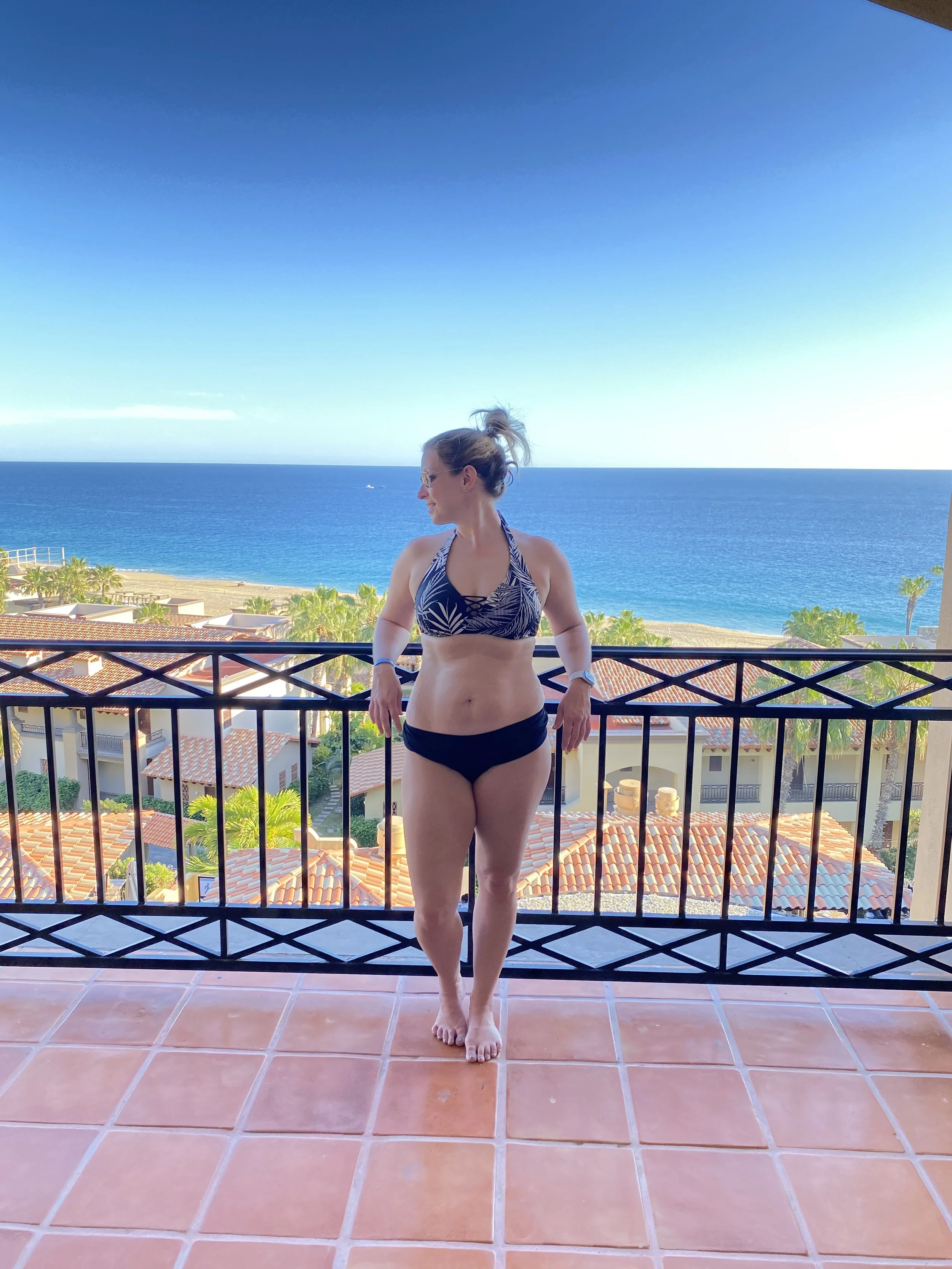

Jan 2021, pre surgery

Or..start here!

The body I accepted wasn’t my natural body — it was my diet body.

In 2021, I made the decision to have a tummy tuck and liposuction.
Not because I hated my body.
Not because I wanted to “fix” myself.
And definitely not because I felt pressure from anyone else.

I had actually done the work.
I was in a good place with my body.
I had accepted the stretch marks, the mom sag (Felicia the Flap, may she RIP).
I had found peace with it all.

But I was also curious.

I was in a season of life where I was wondering, “What’s next?”
I felt strong. Confident. In my skin, in my workouts, in my life.

And surgery felt like a next-level step—not a desperate one.
I wanted to see what was possible.
It came from a place of empowerment, not punishment.

I scheduled the consult, feeling a mix of fear (because this surgery is no joke) and excitement for what was to come.

When you meet with a doc, they talk to you about your weight - are you at a manageable weight? Do you plan to lose more? Has this been a steady spot for you? Etc.

And when my doc asked me if I was done losing weight, I said yes.
Because I genuinely believed I was.
I had maintained that size for a while. It felt like my “set point.”
I didn't think I was yo-yo dieting.
I didn't think I was restricting hardcore.
I thought I had finally found my groove.

But here’s what I couldn't see at the time:

The “groove” I was in was still being held together by diet culture.

I wasn’t fully free from the "just one more program" mindset.

I wasn’t doing programs in a punishing way—but I was still chasing progress, still eating in a calorie deficit often enough to stay that size.
Not because I was purposely depriving myself, but because I’d been taught that doing these programs this way was just “healthy.”
That maintenance required vigilance. That this was just how women “stayed fit.”

(Side note: There was RARELY living in maintenance as a coach because when you got to maintenance, you gained weight - so you did another program, lowered your food bracket...aka: the cycle.)

In retrospect - it's like my job as a coach was to be a constant before and after, to show a program worked. I didn’t realize that what I had normalized was actually restriction in disguise.

Couple the woman and coach I am today with everything I’ve learned about intuitive eating, body respect, and how deeply diet culture can root itself into your habits - I can now see that the body I thought I had accepted wasn’t my real body. It was my diet body.

But at the time I was doing the best I could with what I knew.
The surgery wasn’t punishing myself. It wasn’t chasing a fix.
I was just loving the body I had—and making a choice that felt good for me.

And it did feel really good…until it didn’t.

Because when the way you’re maintaining your body isn’t sustainable, any changes—like surgery (or even a cross-country move)—can bring a whole lot of unexpected outcomes.

Once I stopped living in a deficit, my body finally had a chance to recalibrate. And what followed was some unexpected shit.

That’s what I’ll get into in Part 3-how my body changed, what I wasn’t prepared for, and how it shifted the inner work I had to do.

PS - if you are following along, I’d love to hear from you - come let me know over on IG, @ashleylmolitor


BONUS: 8 Sneaky Signs You’re Still Stuck in Diet Culture

Check in to see if diet culture has a grip on you in your life - let’s be real even when you think you’ve ditched diet culture, those sneaky little thoughts (habits) have a way of sliding back in - like when you go to eat fries after already having rice and know you want to have a glass of wine later and you hear Autumn in your ear telling you “that is too many yellows.” IYKYK.

So before you beat yourself up for having a “diet” thought or a bad body image day — pause and check in with yourself.

Here are a few signs you might still be tangled up in diet culture mentality (no shame, just awareness):

  1. You label foods as “good” or “bad.”
    Cupcakes leave you all guilty but a salad earns you a gold star…

  2. You think about what you “should” eat more than what you want or need.
    “Should” is diet culture’s favorite word. Learning to listen to your own body is a practice after years of following rules.

  3. You tie your worth (or your day’s success) to how you ate or moved.
    Your value doesn’t fluctuate based on your calories burned or what you ate for dinner.

  4. You avoid social events because of the food.
    If you’re skipping birthdays or brunches because you’re scared to “mess up,” that’s not freedom—it’s disconnection. Diet culture has made food the main character instead of the people and moments you actually want to enjoy.

  5. You feel like you have to “earn” or “burn off” your food.
    Food is fuel, not a debt to be repaid.

  6. You compare your body to your past self or others and call it “motivation.”
    That kind of “motivation” usually just breeds shame and frustration.

  7. You chase the next “healthy lifestyle” trend that promises to fix you.
    If it’s just dieting with prettier packaging (hello, “wellness resets”), it’s still diet culture.

  8. You struggle to trust yourself around food.
    If you think, “I can’t buy that, I’ll eat the whole thing,” that’s not lack of willpower—it’s a sign diet rules have overridden your self-trust.

Breaking free from diet culture isn’t about perfection—it’s about awareness.
Every time you notice one of these patterns, you take your power back.
That’s the work.
That’s how you heal your relationship with food, your body, and ultimately… yourself.


Disclaimer: This is not medical advice - these are signs to look for that diet culture is still engrained in your daily habits - if you find yourself struggling with more serious food or exercise related issues - please seek help with an eating disorder specialist.

Life After Lipo + Tummy Tuck: The $hit No One Talks About - Part 1

We’re kicking this series off with an intro — a summary of what’s to come, if you will.
$hit I Haven't Talked About Post Tummy Tuck + Lipo.

I’ve shared small pieces of this story on social, but it’s time for the full version — not to convince anyone to do (or not do) what I did, but simply to tell the truth about what it’s been like for me.

Two reasons I’m sharing this:
1. To help anyone make a more informed decision. (I’m putting together a list of questions to help you get clarity if surgery is something on your mind—it’ll drop with the last post of this series.)
2. Because I’m typically an open book, and I’ve gone through some highs and lows with my body over the last few years that I haven’t fully talked about. I had shared on social about these struggles in small doses. But now that I’ve had time to process and reflect, I’m ready to write it all out.

I’ll admit, there were layers of shame built into not talking about it more openly as it was happening.

Shame that my body has changed so much since 2021.
Shame that I still have body image disruptions.
Shame that I coach women on self-acceptance and still have days where I want to crawl out of my own damn skin.

(FYI: Self-acceptance doesn’t mean you love your body every day—it means you don’t abandon yourself on the days you don’t.)

But that’s the thing about shame—it grows in silence.

As Brené Brown says:

“If you put shame in a Petri dish, it needs three things to grow exponentially: secrecy, silence, and judgment. If you put the same amount in a Petri dish and douse it with empathy, it can’t survive.
The two most powerful words when we’re in struggle: me too.”

A lot of my shame came from believing that because I’m a coach who helps women work on self-acceptance, I shouldn’t have my own body thoughts.
That I shouldn’t have struggled with my emotions when life got hard and my body changed.
That I shouldn’t have gained weight after being at my “ideal” weight when I had surgery.

So much “shoulding” all over myself — “shoulding” I would never let a client or friend do to themselves.

But here’s what I know now: going through this didn’t make me less of a coach — it made me a better one.

When I first started coaching, I thought doing “the work” meant those hard thoughts would eventually disappear, replaced with shiny new ones — no shitty thoughts ever again. HAHA.
But I quickly learned that is not the point.

Coaching doesn’t erase the thoughts — it gives you the awareness and tools to meet them with compassion instead of judgment.

Different seasons of life bring up old stories in new ways, and that’s not failure. That’s being human.
And the more I’ve learned to show up for myself in those moments, the more I can help my clients do the same — to see that nothing’s wrong with them when the thoughts pop back up, when they have an off body-image day, or when they feel like they’ve lost progress.

We’re not broken. We’re just learning to meet ourselves differently.

So in sharing my story, I'm hoping to give shame less room to grow. Don't get me wrong - there may be a vulnerability hangover that comes from this series - but I'm just gonna let that be what it is...


Morning of: 4/12/21

When I had my surgery in 2021, I thought I was in full body acceptance.
But the truth is, the body I had accepted wasn’t my real body—it was my diet body.

Smaller. Controlled. Kept that way by years of programs and portion containers and calorie counting disguised as “healthy.”

When I finally broke up with diet culture, started mindful eating, and stopped living in a constant deficit, my real body showed up.
And it was different.

That didn’t mean the old work failed.
It meant I had entered a new season with new triggers and new lessons waiting for me.
Healing doesn’t erase the hard moments—it just gives you the tools to face them differently.

Here’s how it all unfolded:

  • 2015: Became a coach through an MLM focused on dieting + workout programs

  • April 2021: Tummy tuck + liposuction

  • July 2021: Cross-country move

  • January 2022: Moved back home

  • 2022–2023: Started breaking up with diet culture, dabbling in mindful eating

  • Late 2023–2024: Began practicing intuitive eating more consistently

So yeah… my body has changed a lot in that time.
And it’s been harder to re-accept it than I ever expected.

The old thoughts crept in a lot during that season.
The shame unpacked her bags.
And sometimes, I let her stay longer than I should.

But each version of me has taught me something new—and this one’s no different.

This version of me is learning to live what I teach - that growth isn’t linear, that awareness doesn’t erase the hard parts, and that you can accept yourself even on the days it still feels hard — hold compassion for yourself when the old thoughts show up — and know that you can hold both acceptance and growth at the same time.
(AND is a powerful word in acceptance)

Diet culture was like a toxic relationship I didn’t realize I was in.
I had accepted the body that constant dieting created—mom sag and all—and even made peace with my loose skin.
But when I finally broke up with diet culture, everything shifted.
It took me down a new path of self-acceptance I didn’t see coming.

This isn’t a before-and-after story.
Those days are long gone.
It’s not a transformation tied up with a pretty bow — it’s the continuation of the work.

Over the next few posts, I’ll share:
→ Why I chose surgery
→ What happened after
→ The things I didn’t expect
→ The grief and regret I wasn’t prepared for
→ And how I’m learning to accept my body as it is

I’m sharing this for me—and for anyone who’s ever felt lost in their own skin.

(Oh and to keep it even more real, peri-menopause has been adding a whole new twist but that is for another blog series, another time. LOL.)

My Future Self: Winter Edition

Last year, I noticed a pattern after winter.

During the dreaded “W” season, Aaron and I get a little more sedentary — nothing crazy — just more nights on the couch (binging our favorite shows), an extra cocktail or two midweek, and more snacking “because it’s cold and dark.”

And honestly, what the fuck else do we have to do? LOL.

It’s not a problem… until it starts to be. By late winter, I can feel it — I’m sluggish (outside of my usual self-diagnosed SAD) and a little out of sync with my natural day-to-day flow.

It’s like I slowly trade intentionality for autopilot.

But this year, I’m doing it differently, bitches!
I’m planning ahead with my Future Self in mind.
Zero judgement, I’m just getting honest about it. Awareness is key!

While past me hates the cold and boredom of winter, buffers with snacks, shows, and cocktails — which leaves her with more blah energy and less alignment with how she wants to feel. A.K.A. I buffer my winter blues and boredom away.

Future me has it figured out.

So, in an effort to not recreate “past me” - I’ve jumped ahead, pictured myself in March, pictured my Future Self — clear-headed and ready for spring — and I asked her:
What would YOU thank me for this winter for?
What routines would support YOUR energy?
How would YOU spend evenings without reaching for wine and dip?

And she always answers with the best advice…
She says things like:

“Thanks for not making cocktails a weeknight habit.”
“Thanks for choosing connection and creativity instead of buffering away your boredom and winter blues.”

When my brain says, “Eh, one more cocktail won’t hurt,” my future self says:
“Your future self enjoys a Thursday or Friday night cocktail — let’s save it for then and make it special.”

When my brain says, “It’s dark, might as well grab the dip,” she says:
“Tuesday doesn’t need to be party food night. Let’s make something cozy that still feels good. We can have a planned dip night this weekend!”

She’s not about restriction — she’s about intention.
She doesn’t deprive herself, but she also doesn’t overeat or overdrink to get through winter.

Let’s be honest —a good portion of us use food or a cocktail (or even endless scrolling) to manage our boredom or lack of activities in winter.
It’s dark, it’s cold, and sometimes the highlight of the day is what’s for dinner or what’s in the glass (or what’s online).

Side Note: This isn’t about weight loss. Once I share my tummy tuck blog post, this will make even more sense — but I’ve learned through research and personal experience that my body has a natural weight where it loves to hang out. That natural weight isn’t the version of me who’s overeating or overdrinking — she’s the version who lives her life without restriction but also without buffering.

And honestly, that’s exactly how I help my clients too. We don’t overhaul their diets or obsess over calorie deficits. We look at where they might be overeating, overdrinking, eating their feels, or stuck in diet cycles — restricting during the week, then going ham on the weekends — and instead, we work on mindful, sustainable choices that feel good long-term.

Because when you stop buffering or spinning in the “diet cycle” - you naturally land closer to your body’s happy place —your natural weight.


I’ve learned that buffering — snacking, sipping, zoning out — doesn’t actually make me feel better. It just gets me to spring like, ‘Cool, I made it… but I also feel like ass and slept like shit for 3 months.’

This year, I’m thinking of both versions of me:

  • My future self in spring who’ll thank me for not buffering.

  • And the current version of me (in winter) who wants to feel more alive and less sluggish.

Instead of reaching for a snack or another drink because there’s ‘nothing else to do,’ I’m asking: What do I really need in this moment? Or what choice can I make now that will positively impact how I show up tomorrow?

Sometimes it’s a walk, a puzzle, or tea instead of wine. She knows she can feel bored and let it be — or find things that lift her up instead of adding to the blah.

If I can set Winter Me up with that kind of love and care, I know Spring Me is going to feel so damn proud.

If you want to try this too, here are a few prompts from my own journal this week:

  • What does she choose instead on weeknights that still feels fun or comforting?

  • What routines help her enjoy being inside during winter instead of resenting it?

  • What would feel good for her mind + in her body come spring-what supports that now

Because here’s the thing — if you’re not connected to the future version of yourself, even just a few months out, you’re way more likely to make decisions that only feel good in the moment.

You’ll reach for that instant gratification or dopamine hit — the extra drink, the snack, the scroll — but that’s exactly what gets us to the next season asking, “How the fuck did I get here?!”

So I’m not waiting for spring to feel better.
I’m becoming her now — by visualizing what winter looks like for her, and choosing, one cozy, intentional moment at a time.


That Awkward Space Between Who You Were and Who You’re Becoming

After every event or workshop I host, I do my own little evaluation.
What worked
What didn’t
What I’d do differently next time

That part’s helpful. That’s how I learn and grow.

But then a few days later… my brain likes to go off-script.

It starts reminding me of everything I didn’t do —
Like how I forgot to share a few examples of how I personally use the tool I taught.

(Reminder: this evaluation is supposed to help me improve, not roast myself…but my brain can be a bit of an ass sometimes.)

And then it loves to throw in a few classics:
“They probably didn’t get what they needed.”
“Who are you to be coaching a room full of women?”

And there it is — the old story trying to make a comeback.

If I listened to it, I’d never show up again.

My current (and Future) Self are living proof that I’m exactly where I’m supposed to be.
But my past self still loves to try to pull me back in. 🤦🏼‍♀️

That’s the weird in-between — the messy middle between who I used to be and who I’m becoming.

And that’s where those stories get the loudest.
They whisper,
“Stay small.”
“Don’t get too confident.”
“Play it safe.”

Your brain’s job is to keep you comfortable.
Familiar.
Predictable.
And when you start doing things that stretch you — things your old self wouldn’t have dared to do — your brain freaks the hell out.

Because growth feels unsafe to the part of you that just wants to be liked, accepted, and certain.

Here’s the thing: self-doubt isn’t proof you’re not capable.
It’s not even a fact.

It’s a thought loop built from old beliefs — the ones your brain created to keep you safe, not growing or trying to new things.

Self-doubt isn’t a warning sign to stop. It’s an old story trying to keep you small.

When you believe that story, you start spinning.
You replay every moment, every “mistake,” every reason you shouldn’t be where you are.

You start finding all the evidence for how that story is still true — and before you know it, you’re torn between seeking comfort in the old version of you and still wanting to step into something new.

Coaching taught me how to catch those thoughts before they run the show.

Here’s what that looks like in real life:
Notice it. Catch the thought before you automatically believe it. “Oh hey, there’s that old story again.”
Name it. Say what it is — fear, perfectionism, comparison, whatever.
Question it. Ask, “Is that actually true?” and “What else could be true?”
Redirect it. Find evidence for your new story — proof of the woman you’re becoming.

Because that’s what we all do, right?
We tell ourselves stories all day long:
“I can’t do that.”
“I’m not ready.”
“They’ll think I’m too much.”

But when you start questioning them —
When you shift your brain from fear to possibility —
You stop playing small and start creating what you actually want in life.

That’s how you spot the story.
That’s how you take your power back.

So yeah, maybe I missed a few points I wanted to touch on at my event.
But I also filled a room with women who showed up because they believe in what I do.

That’s my proof.
Proof that the new story — “I’m a coach who hosts events and changes lives” — isn’t just possible.
It’s already happening.

And that’s the work I want for every woman I coach:
To stop looking for confidence before you act…and start acting in ways that build your confidence.

Because if you keep waiting to feel ready before you believe you belong, you’ll stay stuck in that loop forever.

Your Future Self doesn’t have it all figured out — she’s just learned to stop letting old stories run the show.
She’s built enough evidence to trust that she’s allowed to take up space, even when it feels uncomfortable.

The goal isn’t to never feel self-doubt again — it’s to notice it sooner and recover faster.
That’s what “moving through it” actually looks like.
Less time spinning, more time choosing the story that serves who you’re becoming.

So next time your brain starts throwing shade, remember:
Self-doubt isn’t proof you’re not ready — it’s an old version of you trying to keep you safe.

You don’t have to get rid of it.
You just have to recognize it for what it is…
and keep moving toward the version of you who already knows —you’re exactly where you’re meant to be.

College Visits Hit Different When Your Kid Has Food Allergies

It’s one thing to be in the season of college visits — that alone is rough.
But it’s another thing to realize your kid with severe food allergies may be going to school hours away.

The first college visit — close to home — didn’t hit me that hard.
It felt exciting, manageable, safe.

The second one — five hours away — that’s when it hit me.
ALL the fears came rushing in — especially the ones related to his food allergies and this next chapter of college life.

Because my brain goes straight to:

  • Will he remember to carry his EpiPen everywhere?

  • Will he always tell the server at a restaurant?

  • Will the dining hall take his allergies seriously?

  • Will his roommate respect his allergies?

  • And this one sounds silly, but it’s legit — when he meets a random girl at a party, will he remember he can’t just kiss anyone… because what they ate that day matters?

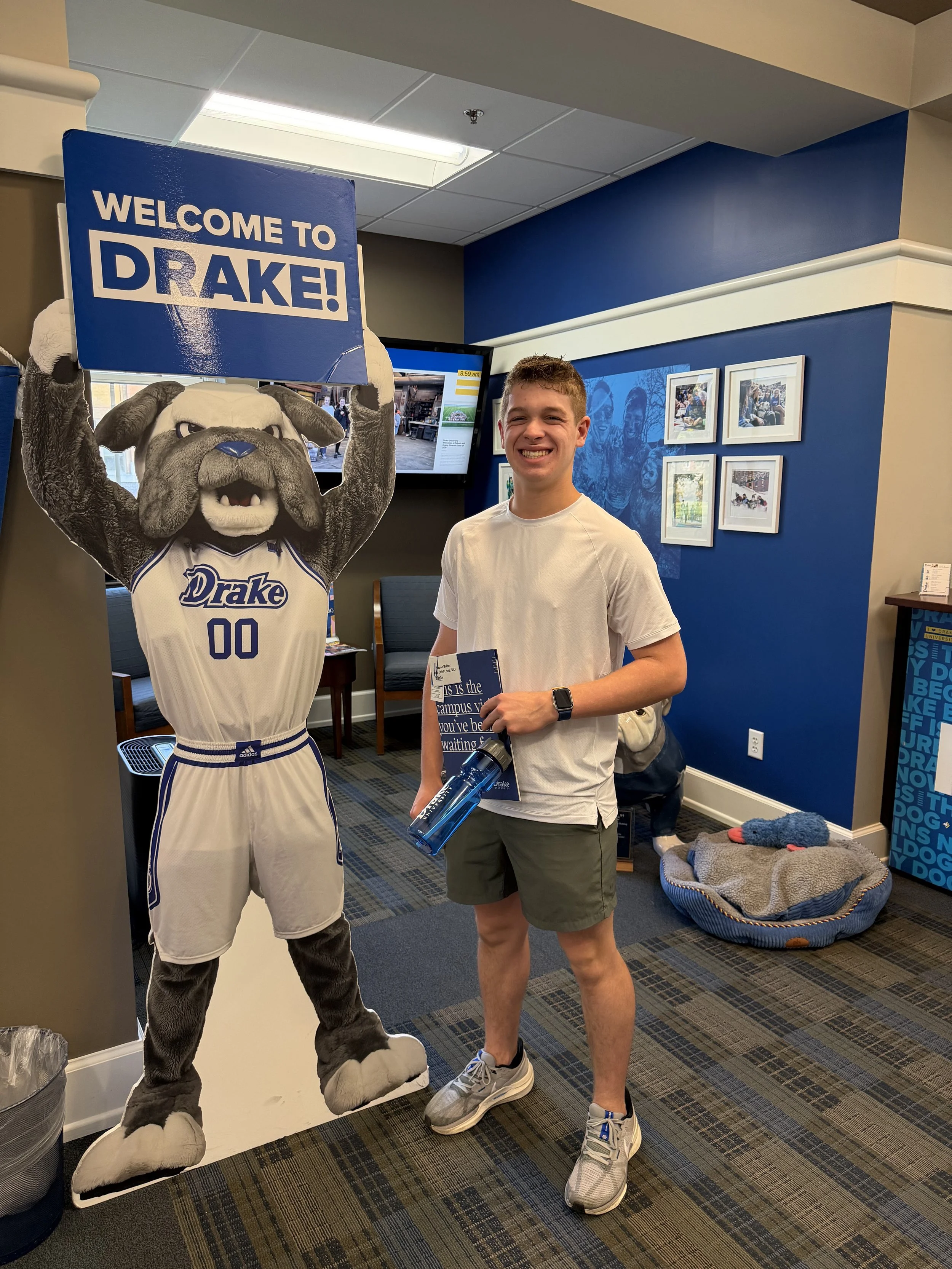
We’ve spent 13 years managing Mason’s tree nut + sesame allergy (since his first reaction that led to the diagnosis in 2012).

Reading and rereading labels.
Choosing “safe” vacations.
Finding local restaurants we can trust.
Packing backup snacks — just in case.
Explaining that tree nuts are not peanuts (yes… this happens).
Double-checking the planned food anytime he’s not with us.

An EpiPen always in reach.
Aaron or I always close by.

But the thought of him being that far away — where I can’t just get to him if he needs me —
it’s like losing a layer of protection… one that I can’t control.

Yeah, that’s when it all caught up to me Friday night.
I cried just speaking my fears out loud to Aaron at dinner.

When you’re a mom of a child with a severe food allergy, this isn’t just about a college decision.
It’s about letting go.

About trusting that all the years of teaching, reminding, and preparing… will carry him when we can’t.

So if you’re a mom:
Navigating college visits
Sending your kid off with allergies
Or in your feels because “five hours away” suddenly feels like five million…
I see you.

And if you’re a food allergy mom whose kid is already away at school —
share all the tips on how you sleep at night.
I have a feeling I’m gonna need them.