
If you missed it: Part 1
And before I dive into Part 2 — if you want, you can catch up on my realization that I had totally drank the diet culture Kool-Aid here. But you don’t need to read that to follow along with this story. It’s just a good post about how I spent years knee-deep in dieting before finally seeing it for what it was.
From 2015 to 2021, my life was basically doing programs, eating out of portion-control containers, and coaching other women through the same thing. But honestly, the best part — no joke — was learning the power of doing things for my future self, becoming aware of my self-talk, questioning the stories I told myself, and realizing I had the power to change them. That’s the work that evolved into the coach I am today.
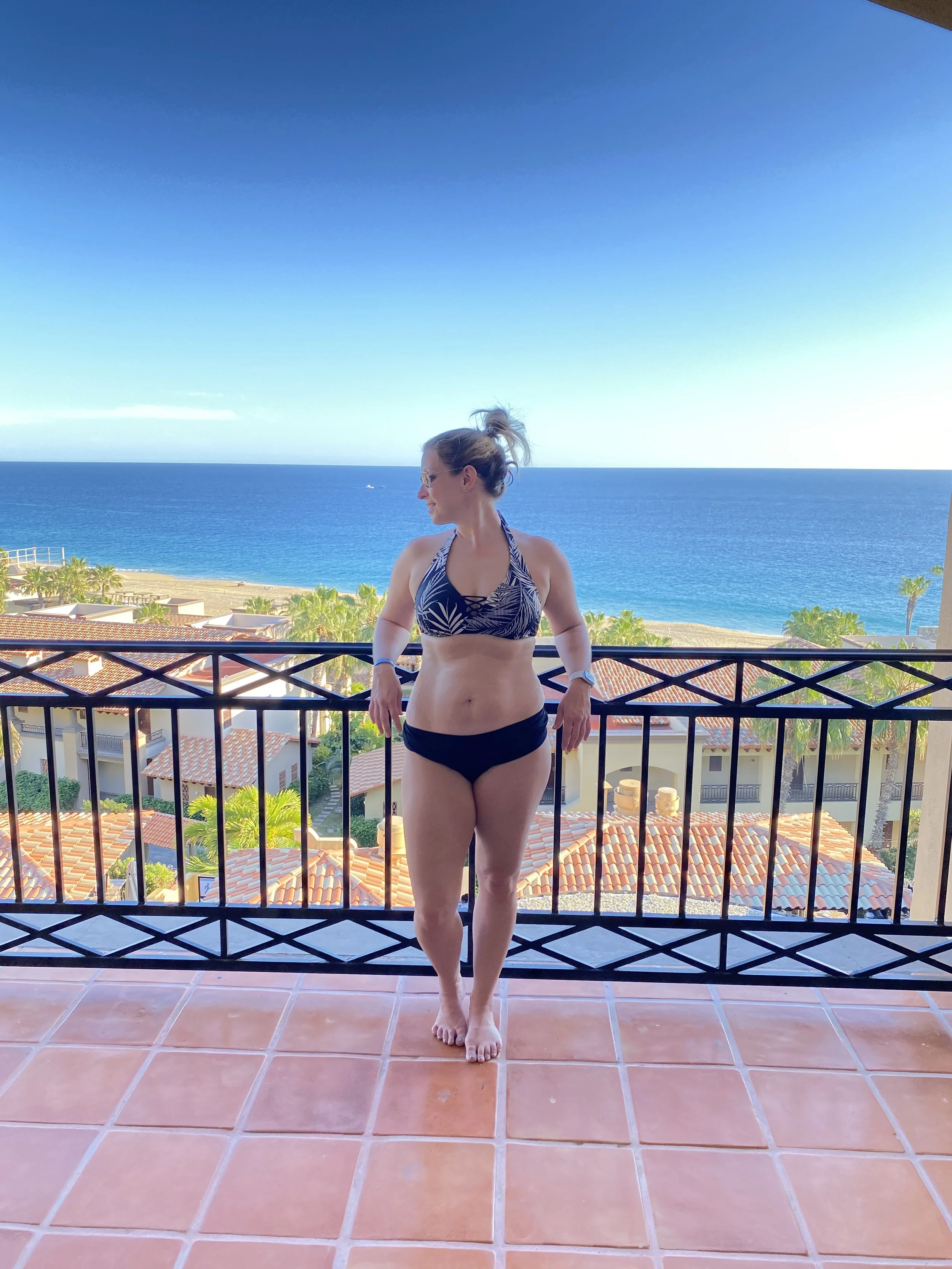
Jan 2021, pre surgery
Or..start here!
The body I accepted wasn’t my natural body — it was my diet body.
In 2021, I made the decision to have a tummy tuck and liposuction.
Not because I hated my body.
Not because I wanted to “fix” myself.
And definitely not because I felt pressure from anyone else.
I had actually done the work.
I was in a good place with my body.
I had accepted the stretch marks, the mom sag (Felicia the Flap, may she RIP).
I had found peace with it all.
But I was also curious.
I was in a season of life where I was wondering, “What’s next?”
I felt strong. Confident. In my skin, in my workouts, in my life.
And surgery felt like a next-level step—not a desperate one.
I wanted to see what was possible.
It came from a place of empowerment, not punishment.
I scheduled the consult, feeling a mix of fear (because this surgery is no joke) and excitement for what was to come.
When you meet with a doc, they talk to you about your weight - are you at a manageable weight? Do you plan to lose more? Has this been a steady spot for you? Etc.
And when my doc asked me if I was done losing weight, I said yes.
Because I genuinely believed I was.
I had maintained that size for a while. It felt like my “set point.”
I didn't think I was yo-yo dieting.
I didn't think I was restricting hardcore.
I thought I had finally found my groove.
But here’s what I couldn't see at the time:
The “groove” I was in was still being held together by diet culture.
I wasn’t fully free from the "just one more program" mindset.
I wasn’t doing programs in a punishing way—but I was still chasing progress, still eating in a calorie deficit often enough to stay that size.
Not because I was purposely depriving myself, but because I’d been taught that doing these programs this way was just “healthy.”
That maintenance required vigilance. That this was just how women “stayed fit.”
(Side note: There was RARELY living in maintenance as a coach because when you got to maintenance, you gained weight - so you did another program, lowered your food bracket...aka: the cycle.)
In retrospect - it's like my job as a coach was to be a constant before and after, to show a program worked. I didn’t realize that what I had normalized was actually restriction in disguise.
Couple the woman and coach I am today with everything I’ve learned about intuitive eating, body respect, and how deeply diet culture can root itself into your habits - I can now see that the body I thought I had accepted wasn’t my real body. It was my diet body.
But at the time I was doing the best I could with what I knew.
The surgery wasn’t punishing myself. It wasn’t chasing a fix.
I was just loving the body I had—and making a choice that felt good for me.
And it did feel really good…until it didn’t.
Because when the way you’re maintaining your body isn’t sustainable, any changes—like surgery (or even a cross-country move)—can bring a whole lot of unexpected outcomes.
Once I stopped living in a deficit, my body finally had a chance to recalibrate. And what followed was some unexpected shit.
That’s what I’ll get into in Part 3-how my body changed, what I wasn’t prepared for, and how it shifted the inner work I had to do.
PS - if you are following along, I’d love to hear from you - come let me know over on IG, @ashleylmolitor
BONUS: 8 Sneaky Signs You’re Still Stuck in Diet Culture
Check in to see if diet culture has a grip on you in your life - let’s be real even when you think you’ve ditched diet culture, those sneaky little thoughts (habits) have a way of sliding back in - like when you go to eat fries after already having rice and know you want to have a glass of wine later and you hear Autumn in your ear telling you “that is too many yellows.” IYKYK.
So before you beat yourself up for having a “diet” thought or a bad body image day — pause and check in with yourself.
Here are a few signs you might still be tangled up in diet culture mentality (no shame, just awareness):
You label foods as “good” or “bad.”
Cupcakes leave you all guilty but a salad earns you a gold star…You think about what you “should” eat more than what you want or need.
“Should” is diet culture’s favorite word. Learning to listen to your own body is a practice after years of following rules.You tie your worth (or your day’s success) to how you ate or moved.
Your value doesn’t fluctuate based on your calories burned or what you ate for dinner.You avoid social events because of the food.
If you’re skipping birthdays or brunches because you’re scared to “mess up,” that’s not freedom—it’s disconnection. Diet culture has made food the main character instead of the people and moments you actually want to enjoy.You feel like you have to “earn” or “burn off” your food.
Food is fuel, not a debt to be repaid.You compare your body to your past self or others and call it “motivation.”
That kind of “motivation” usually just breeds shame and frustration.You chase the next “healthy lifestyle” trend that promises to fix you.
If it’s just dieting with prettier packaging (hello, “wellness resets”), it’s still diet culture.You struggle to trust yourself around food.
If you think, “I can’t buy that, I’ll eat the whole thing,” that’s not lack of willpower—it’s a sign diet rules have overridden your self-trust.
Breaking free from diet culture isn’t about perfection—it’s about awareness.
Every time you notice one of these patterns, you take your power back.
That’s the work.
That’s how you heal your relationship with food, your body, and ultimately… yourself.
Disclaimer: This is not medical advice - these are signs to look for that diet culture is still engrained in your daily habits - if you find yourself struggling with more serious food or exercise related issues - please seek help with an eating disorder specialist.